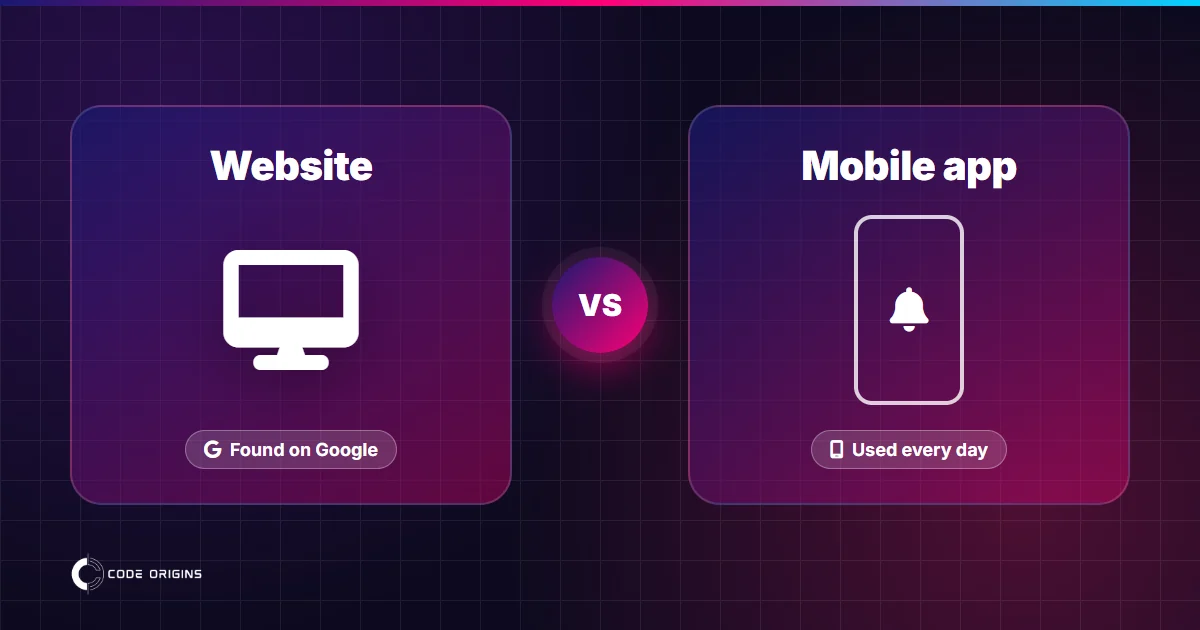
For most businesses the right start is a website: people find it on Google, it opens on any device, and the customer does not need to install anything. A mobile app is needed when customers work with you often — several times a week — and you need notifications, a personal account or offline use. The best approach is one shared backend written in clean code: the website first, then the app on the same system.
| Criterion | Website | Mobile app |
|---|---|---|
| How people find it | On Google and AI assistants | On the App Store and Google Play |
| Installation | Not needed | Must be downloaded |
| Notifications | Limited | Push notifications to the phone |
| How often it is used | One-off and occasional visits | Daily or weekly use |
| Launch time | Shorter | Longer, including store review |
| Updates | Instantly for everyone | Through the stores |
When to start with a website
- You need new customers from Google.
- A customer comes to you once or a few times.
- You want to launch fast and test demand.
When you need an app
- Customers or employees work with you every day.
- You need push notifications, a personal account, bonuses or chat.
- You need the camera, QR codes or location.
Why we recommend one backend
We write one clean-code backend that serves both the website and the app. That way data, orders and users are always the same, and the app can be added later without rebuilding the website.
From our experience
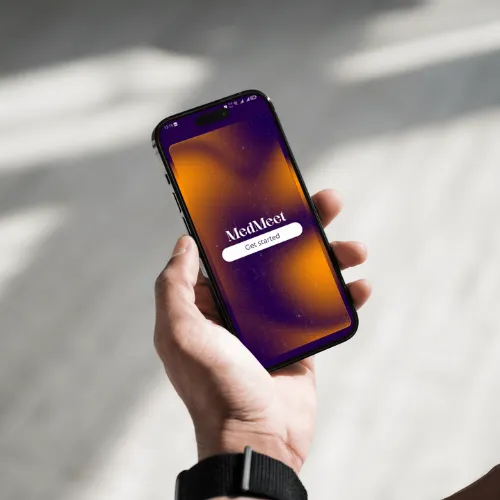
For MedMeet we built both the website and the mobile app on one system: participants register on the website, and in the app they get their ticket, notifications and the QR code for entry.
From our work
Full portfolio
Have a project?
We will tell you which technology fits your project and estimate the timeline and cost.