How to choose the right technology for your project
We build websites and mobile apps only with clean code, without WordPress, Wix, Tilda, Shopify or similar website builders and ready-made templates. Here we explain why, and how to choose the right solution for your business.
 01
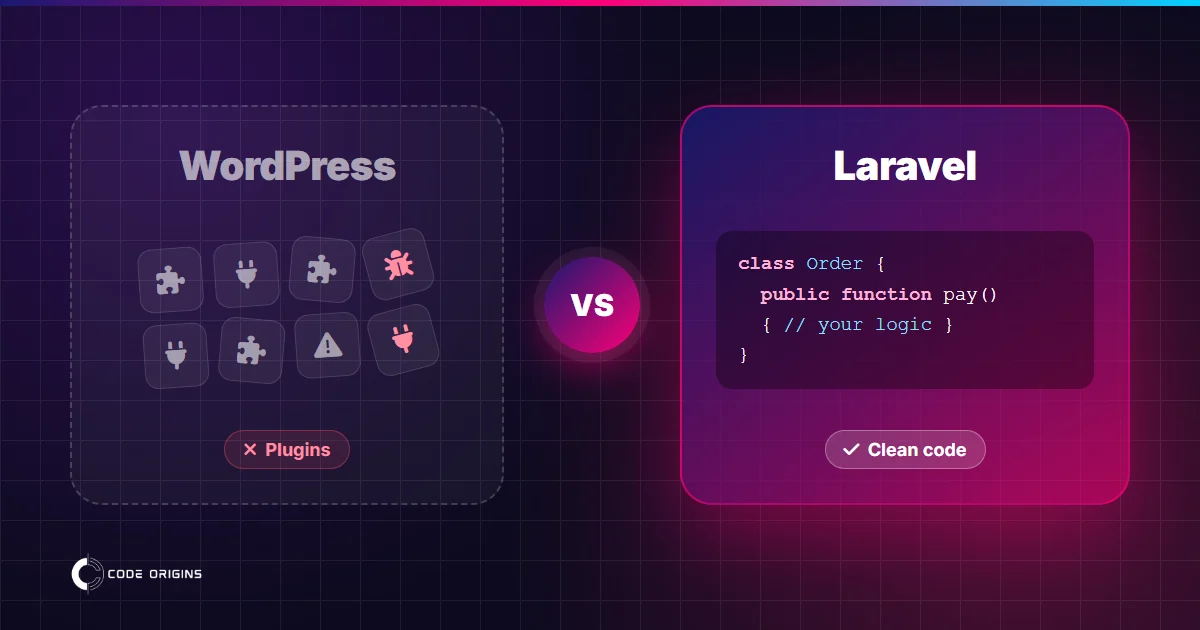
Laravel or WordPress: why a serious website should be built with clean code
WordPress was created for blogs, and when a business website is built on it, it quickly turns into a pile of dozens of plugins that slow the site down, open security holes and break during updates. A website written in clean code with Laravel contains only what your business needs: it is faster, more secure, and it can grow for years without starting over.
Read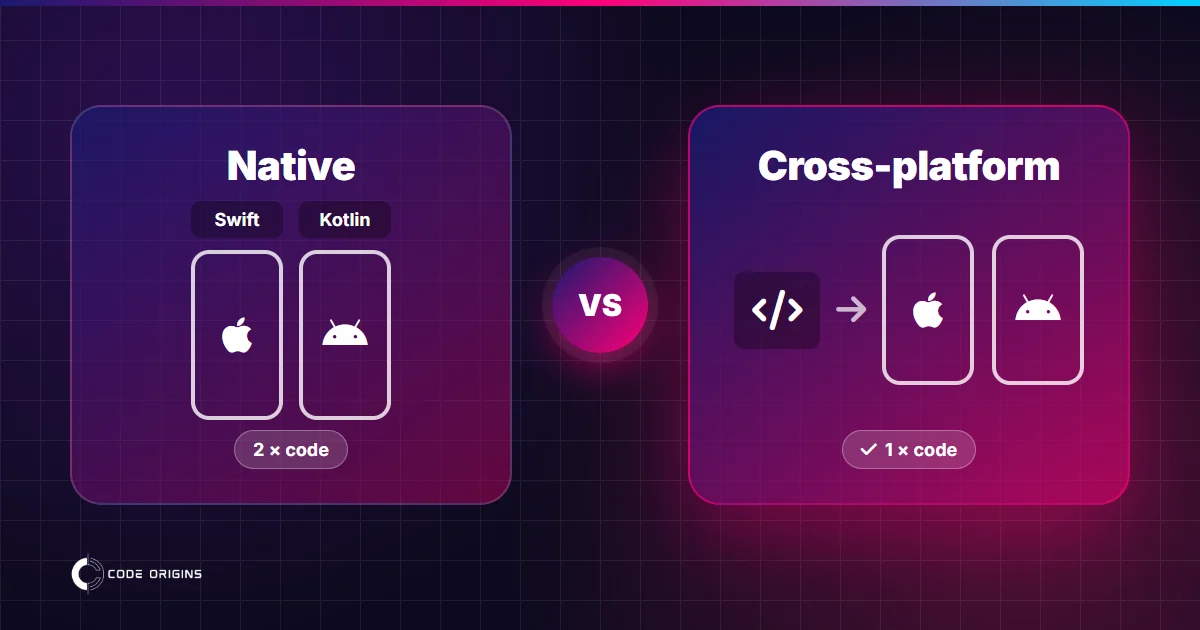 02
Native or cross-platform: how to build your mobile app
For most business apps a cross-platform approach (React Native or Flutter) is the best choice: one codebase gives you both iOS and Android apps, at a much lower cost and in less time. Choose native (Swift for iOS, Kotlin for Android) when the app makes deep use of the device or needs maximum performance, for example games or heavy video processing.
Read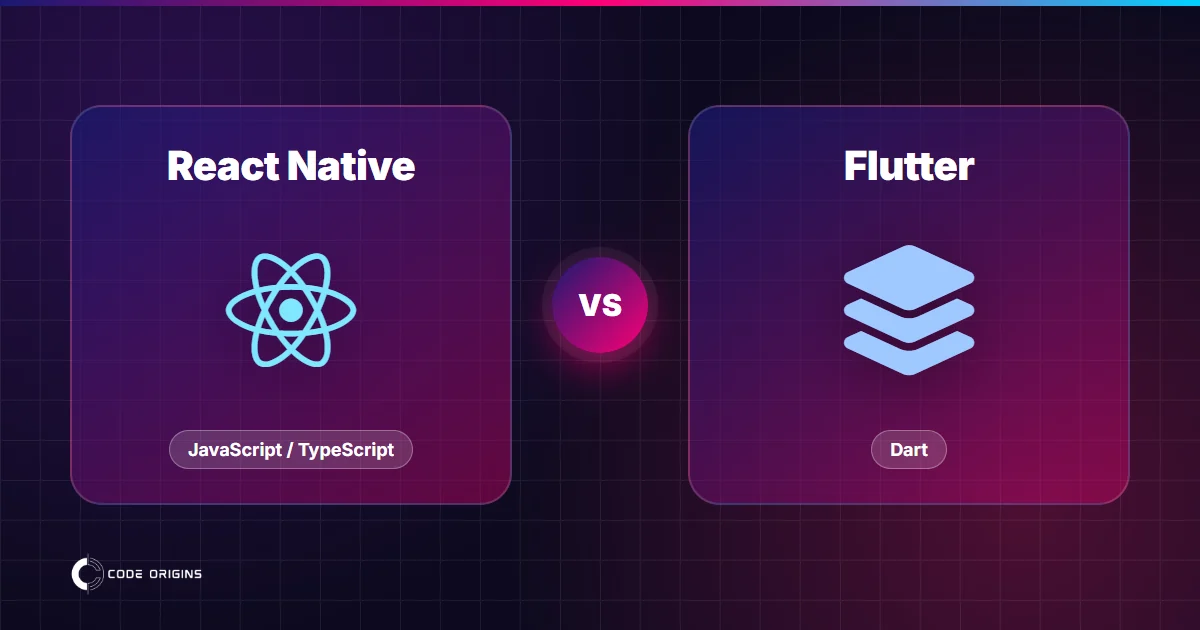 03
React Native or Flutter: which one to choose
Both let you build iOS and Android apps from one codebase, and both are a good choice for most business apps. React Native fits better when you also have a JavaScript website or want it to be easier to find developers. Flutter fits better when the app has many complex animations and you want exactly the same look on every device.
Read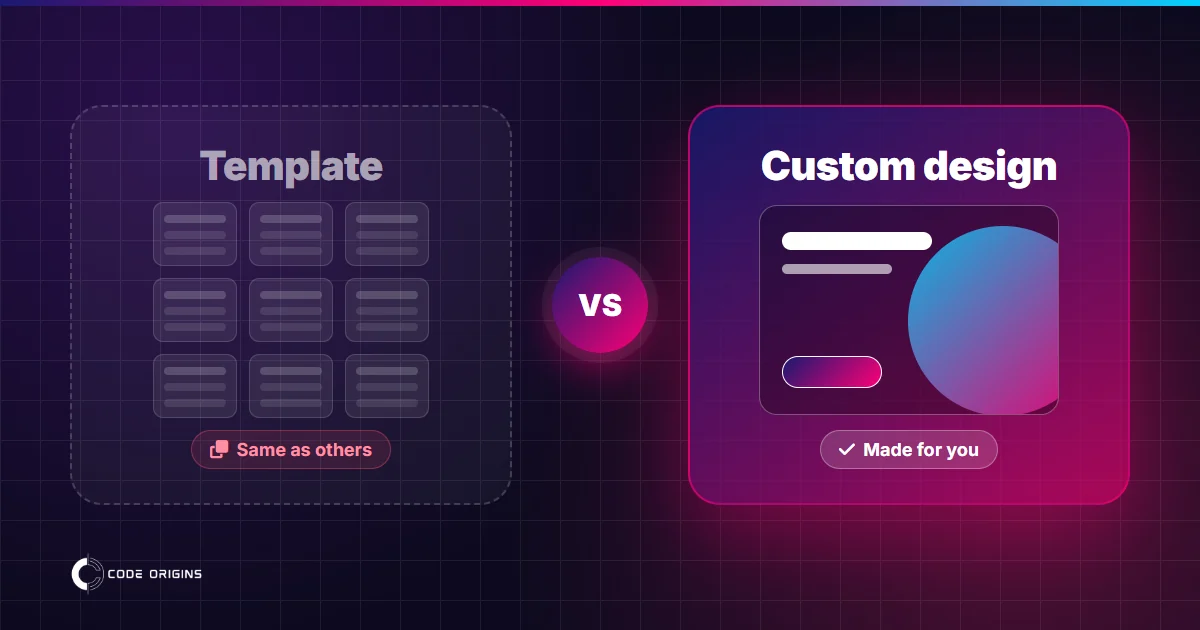 04
Ready-made template or custom design
A ready-made template looks cheap at first, but your website ends up looking like hundreds of others, and the template's extra code slows it down. As the business grows, the template's limits get in the way, and the website has to be rebuilt. A custom design with clean code is created for your business and your customers: such a website sells better, is easier to remember and grows with you.
Read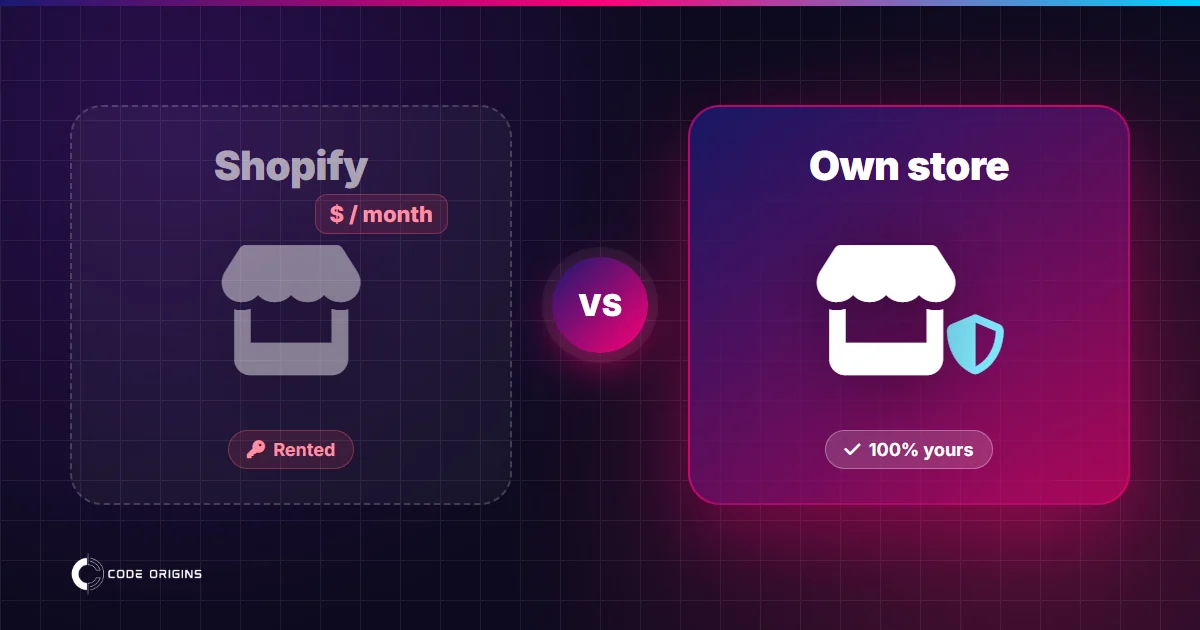 05
Shopify or your own online store
A Shopify store is not yours: you pay every month for the subscription, apps and sales fees, you depend on the platform's rules, and support for Armenian payment systems is limited. In your own store written in clean code, the website and the data are fully yours, you can connect any payment system, link it to your warehouse or accounting system, and there are no monthly fees to a platform.
Read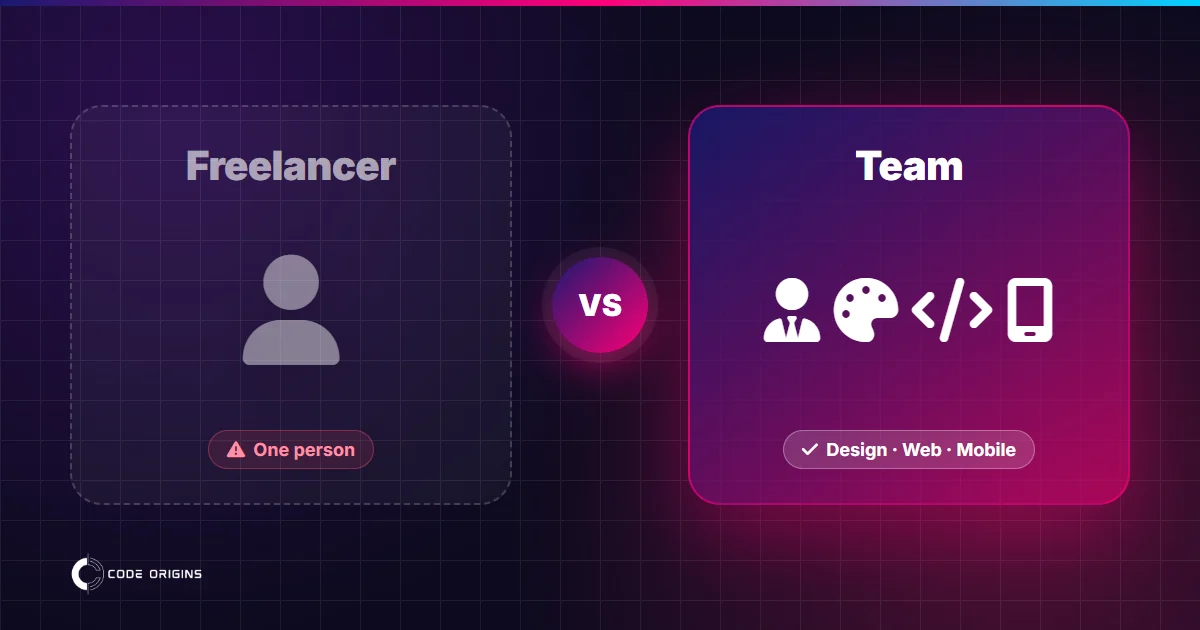 06
Freelancer or software development company
A freelancer fits a small, clear task that one person can do. If the project needs design, a backend, a mobile app and long-term support, it is safer to work with a team: work does not stop if one person gets sick or leaves, and responsibility is in one place.
Read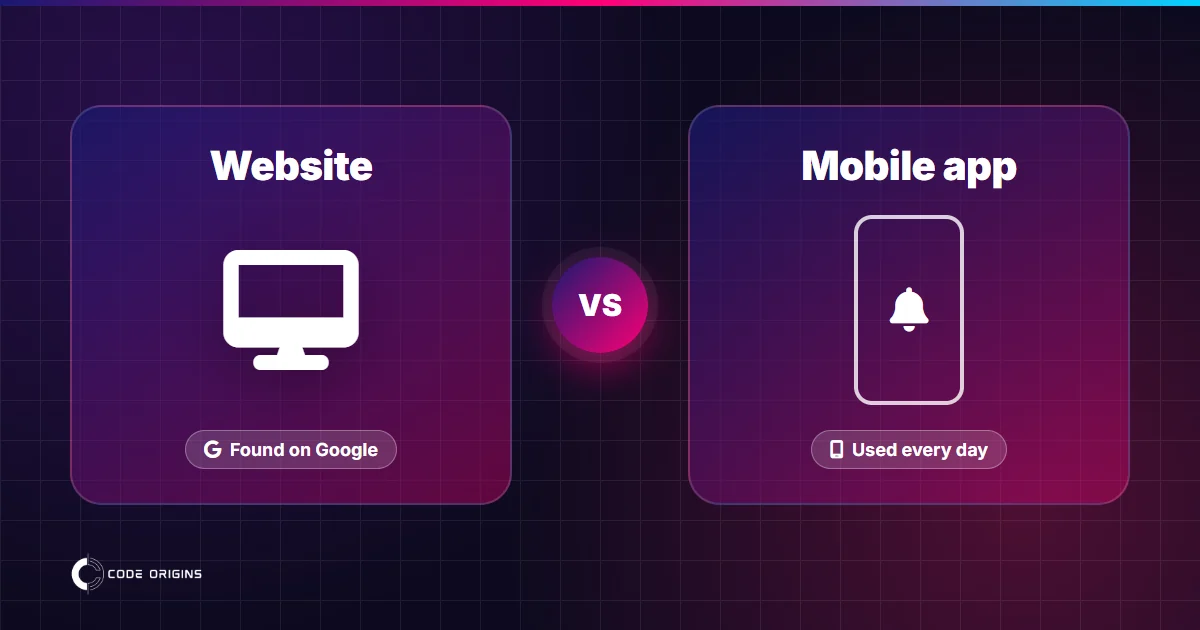 07
Website or mobile app: where to start
For most businesses the right start is a website: people find it on Google, it opens on any device, and the customer does not need to install anything. A mobile app is needed when customers work with you often — several times a week — and you need notifications, a personal account or offline use. The best approach is one shared backend written in clean code: the website first, then the app on the same system.
Read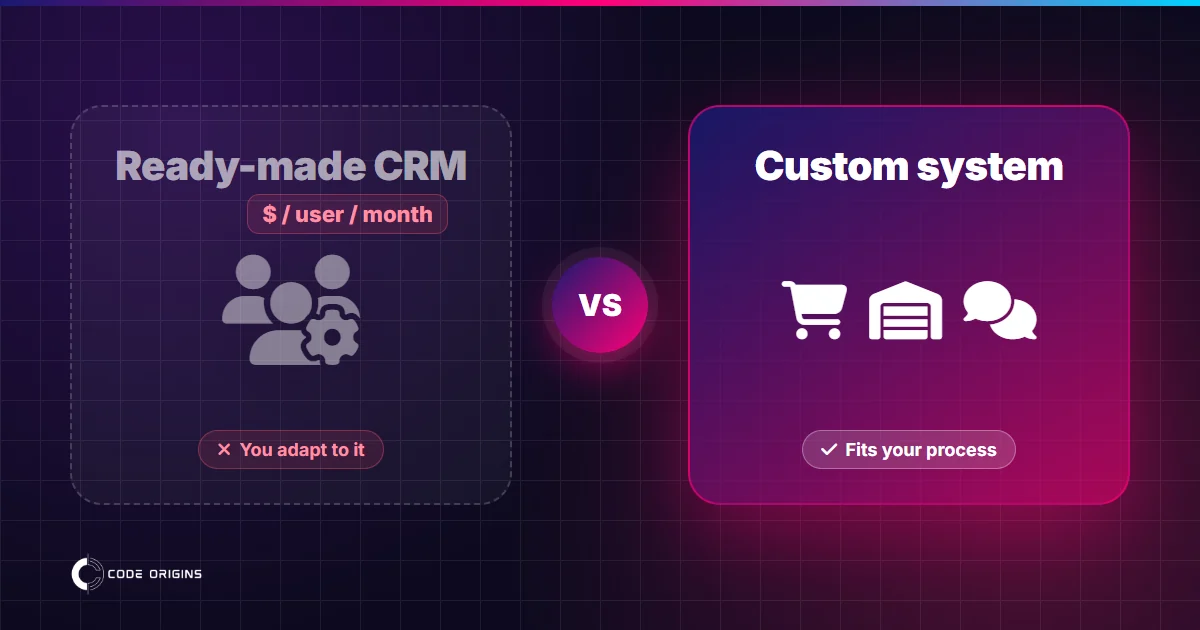 08
Ready-made CRM or a custom system
A ready-made CRM (for example Bitrix24 or amoCRM) fits when your workflow is standard and you are ready to adapt to the software. But you pay for every employee every month, use only a small part of the features, and your own processes do not fit into the software. A custom system is written in clean code for your workflow: it contains only what your team needs and connects to your website, warehouse and accounting.
Read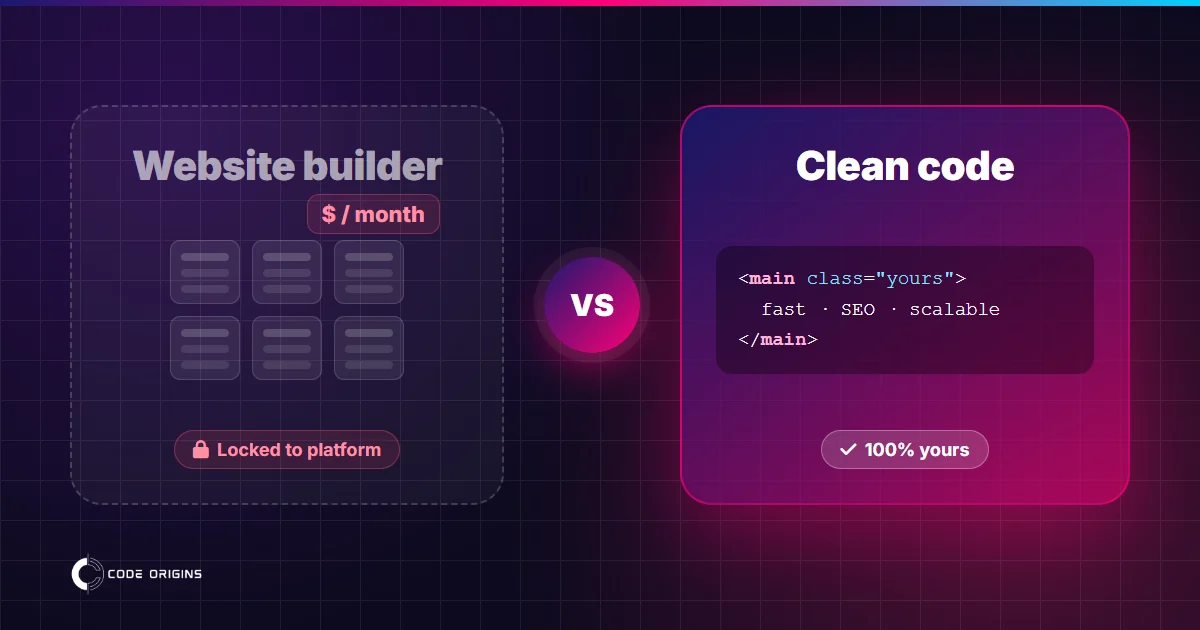 09
Wix, Tilda, Webflow or clean code
Website builders (Wix, Tilda, Webflow, Squarespace, Framer, Weebly, Google Sites and similar services) let you put together a one-page site in a few days, but the site is not yours: you pay the platform every month, you cannot move the site to another server, and you are limited to what the builder allows. A clean-code website is fully yours: it loads faster, ranks better on Google and can grow with your business — with personal accounts, payments and integrations.
ReadHave a project?
We will tell you which technology fits your project and estimate the timeline and cost.